This post contains affiliate links. We may earn a small commission when you buy through our links — at no extra cost to you.
A bottle of white ink that won’t blend is the kind of problem you notice mid-session, with a client waiting and a glove full of pigment. A tattoo ink mixer is supposed to solve that in seconds: seat the bottle, press the button, and let the motor do the shaking. But the difference between a mixer that smooths a stubborn pigment and one that just rattles the bottle—or walks it across the tray—shows up fast. Over the past four months, we’ve put 15 mixers through studio work, and good ones buy you a cleaner, more consistent mix without adding noise, mess, or extra cleanup.
I keep a glass rod within reach, but a mixer that grips the bottle securely and keeps splatter inside the cup earns its counter space. The wrong ones were louder than a rotary machine, wandered across the tray, choked on thicker pigments, or felt loose within a week. Price didn’t predict much—some affordable units mixed as evenly as pricier ones—so the picks below are sorted by what happens at the station, not the spec sheet.
Our Top Picks
The Best Tattoo Ink Mixers, Reviewed
Bysiter Ink Mixer Kit – Best Overall
Key Features
- Type: Dip-in stick stirrer
- Power: 2x AA batteries
- Weight: 2.08 oz
- Mixing sticks: 100 included, connectable
- Price: Budget
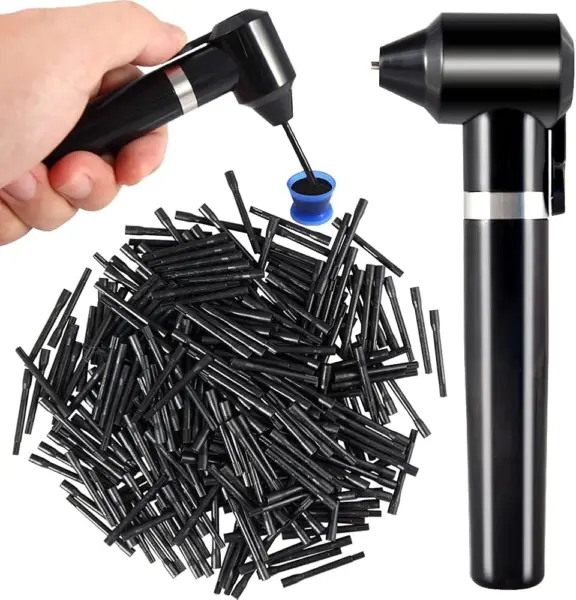
The sticks in this kit join end to end, and that small piece of design is why it’s our top pick: snap two together and the same machine reaches the bottom of a full pigment bottle instead of working only in a cap. The rest is deliberately plain — a plastic body, a strip-bar button on the head, two AA cells, and 100 sticks in the box.
Mixing is where it earns its place. The motor breaks up settled pigment and the little clumps that survive a shake, and it does it in a cap of color or a cap of greywash without ceremony. Battery life is the quiet advantage: two AA cells go a long way in a tool this light, and nothing about the machine leaves you hunting for fresh ones mid-appointment.
What you accept for the price is one speed. Hold the button and it spins, release and it stops, so control comes from your thumb rather than a dial — feather it for greywash, lean on it for a thick pigment. It’s a light tool, which is an advantage in a drawer and a small liability on a crowded bench. At this end of the market, we haven’t found a kit we prefer on the station.
Pros
- Sticks snap together to reach deep bottles
- Breaks up clumps and settled pigment
- AA cells last through long sessions
- 100 disposable sticks included
Cons
- Single-use sticks run out fast
- Batteries not included
Our default buy for mixing ink in a cap: a complete, cheap kit whose connectable sticks reach pigment a short stick can’t.
KVM Mini Vortex Mixer – Best Vortex Mixer
Key Features
- Base: Suction cups
- Weight: 15.5 oz
- Footprint: 4.65 x 4.61 x 4.57 inches
- Top speed: 5,200 rpm
- Price: Midrange
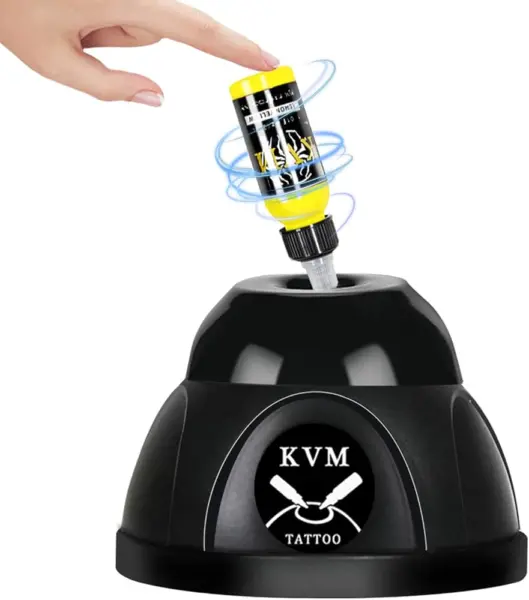
There’s no stick in this one. A vortex mixer is a small weighted box with a rubber cup on top: you press the bottle down onto the cup, the machine shakes the whole container, and the pigment is back in suspension in a few seconds. The KVM turns at up to 5,200 rpm and is built to sit still while it does it, with suction feet for a smooth bench.
The appeal is that nothing goes into the ink and nothing comes out. No cap to pour into, no stick to bin, no pigment drying on the side of a cup. Dropper bottles, squeeze bottles and the bottle the color shipped in all work, and it does the same job on nail polish and airbrush paint. We reach for it whenever a bottle has been sitting long enough for the solids to drop.
The trade-off is flexibility. A vortex only works with a container you can hold flat against the cup, so a wide-mouth cap or a half-full jar is awkward, and you feel the vibration through your hand the whole time. It’s a motor in a box, and it buzzes like one; that’s the method rather than a fault, but it isn’t the near-silent tool the AA stirrers are.
It costs more than the stick mixers here, and it earns that if you mix several bottles a day and have come to hate the sight of used sticks. Work mostly out of a cap and the difference is better spent on sticks — the Bysiter is the more useful tool there.
Pros
- Mixes in the bottle, nothing to clean
- Suction feet hold it steady
- Handles dropper bottles and nail polish
- Mixes in a few seconds
Cons
- Only suits containers pressed flat
- Buzzing vibration through the hand
The one we choose when the pigment stays in its bottle — press, hold a few seconds, and there’s no stick, no cap and nothing to clean.
Neebol Rechargeable Ink Mixer – Best Rechargeable
Key Features
- Battery: 2,000mAh, USB-C
- Top speed: 10,000 RPM
- Speed modes: 3
- Mixing sticks: 105 included
- Price: Midrange
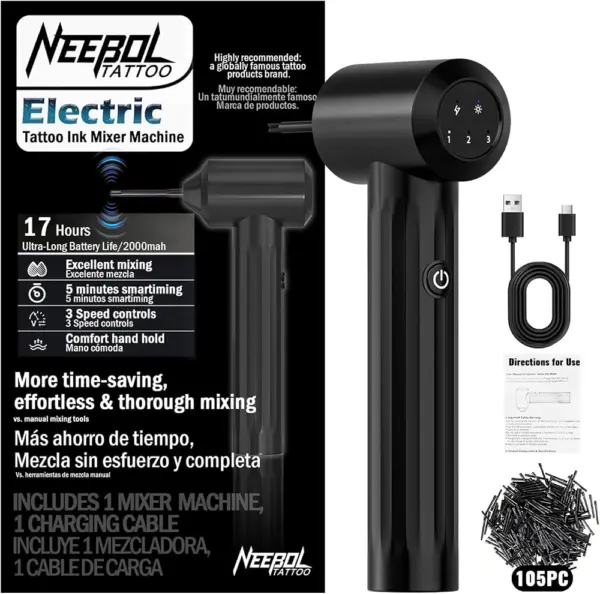
Speed is the thing to understand here. The motor runs to 10,000 rpm across three settings, and even the lowest is quick for the watery pigments that make up a lot of tattoo and PMU work — thin ink leaves the cap when a stick spins that fast. In a deep bottle, or with a thick pigment, the speed stops being a problem and the extra power starts being useful.
What you’re really buying is the cordless part. A 2,000 mAh cell, USB-C charging that fills in three to five hours, and a claimed 17 hours of running: no AA drawer, no dead tool halfway through a client. We point it at artists who mix constantly and have quietly had enough of batteries. For a cap of greywash, the cheap AA stirrers here remain the better-behaved tools.
Two things to weigh. The sticks are the same disposable type everyone uses and 105 come in the box, so restocking isn’t a surprise. The bigger unknown is the motor: this is a light plastic body doing more work per session than a two-cell stirrer, and it’s the pick here we’re least confident about after a year of steady use.
Pros
- No AA batteries; USB-C charging
- Three speeds from a 10,000 rpm motor
- 105 mixing sticks included
Cons
- Fast even at its lowest setting
- Battery is built in, not swappable
We recommend it to anyone done with AA batteries: cordless, three speeds, and better suited to thick pigment than to a cap of thin greywash.
TONBAO Ink Mixer Kit – Best for Pmu and Brow Work
Key Features
- Power: 2x AA batteries
- Housing: ABS plastic
- Machine size: 1.8 x 5.1 inches
- Mixing sticks: 100 included, 1.3 inches
- Price: Budget
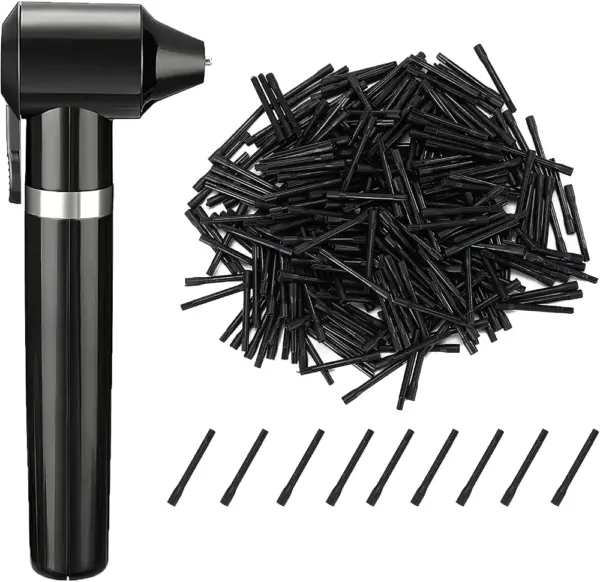
The pigment a brow artist mixes isn’t the pigment a tattooer mixes: thinner, sold in tiny bottles, and settling between clients. This kit is built around that job — a slim machine measuring 1.8 by 5.1 inches, a single button on the head, and 100 short sticks in the box.
For permanent makeup the short sticks are the right length. You’re mixing in a small cap or a pigment cup rather than reaching down a bottle, and the steady spin of a stick stirrer is gentler on thin pigment than a high-speed machine. The 100 sticks matter more here than anywhere else on this list: one per client, one per color, and hygiene stops being a decision you make at the end of a long day.
Where it stops is anything bigger than a pigment cup. Thin PMU pigment is the whole point, and there’s no second speed to reach for when you want more agitation. For anyone doing brows, lips and liners all day, it’s the one we hand over first.
Pros
- Sticks sized for pigment cups
- 100 sticks support one-per-client hygiene
- Slim body fits a small station
- Gentle stir for thin PMU pigment
Cons
- 1.3-inch sticks won’t reach into tall bottles
For brows and PMU we reach for this one: short sticks sized for pigment cups and 100 disposables to keep each client separate.
Yuelong Tattoo Ink Mixer Kit – Budget Starter Kit
Key Features
- Body: High-impact plastic
- Power: 2x AA batteries
- Weight: 2.89 oz
- Mixing sticks: 100 included, snap-together
- Price: Budget
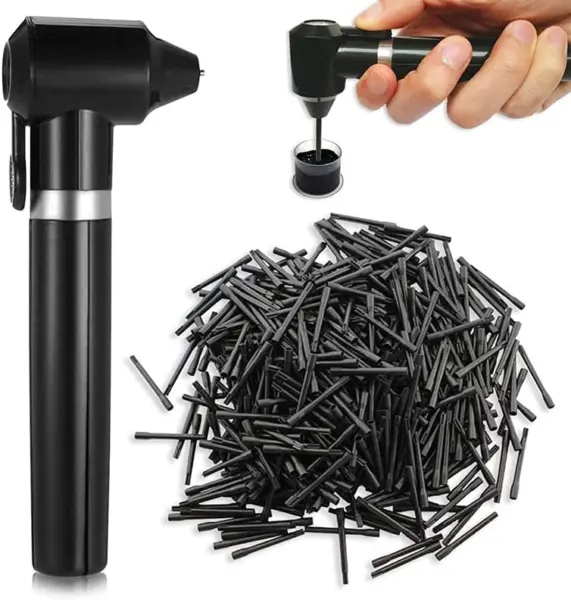
This sits among the least expensive kits here and arrives complete: the mixer, 100 sticks, and a body that takes two AA cells. The sticks snap together the way the better budget kits do, so you can build a longer shaft for a bottle, and the machine itself is small — around 2.9 ounces — and disappears into a drawer between clients.
We treat it as the spare. It’s the kit to buy when you want a second mixer for the other room, a backup in the case, or a first one you don’t have to think hard about. There’s no speed control and the housing is plastic, but nothing about it pretends otherwise, and the 100 sticks mean it’s ready the day it arrives.
Pros
- Snap-together sticks reach deeper bottles
- 100 sticks included
- Light and pocket-sized
- Among the cheapest kits here
Cons
- Batteries not included
We treat it as the second mixer — a complete, low-cost kit with snap-together sticks and 100 of them in the box.
WJCMLT Ink Mixer Set – Best for Mixed-Media Pigments
Key Features
- Power: 2x AA batteries
- Also mixes: Watercolor, nail polish
- Machine type: One-touch stick stirrer
- Mixing sticks: 100 included
- Price: Budget
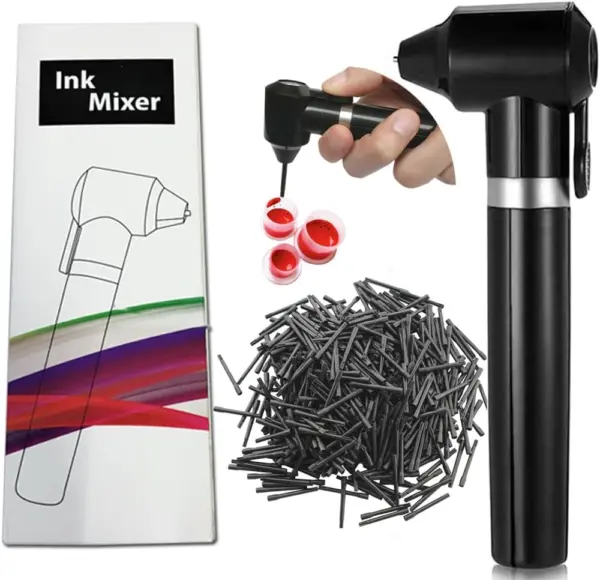
On paper it’s the closest rival to our top pick: the same two-AA power, the same 100-stick kit, the same one-touch strip button. What it adds is range. It’s sold as a mixer for eyebrow ink, watercolor, nail polish and painting pigment as much as for tattoo ink, which makes it the one to buy if the tool is going to sit on a desk shared with other work.
The catch is the button. You hold it down for the whole mix, so a run of colors is a thumb workout. Otherwise it’s the same plastic-and-motor package as everything else at this end of the market, and at this price that isn’t a complaint. Choose it if you want one mixer for ink, paint and polish; choose the Bysiter if you mix tattoo ink all day and want sticks that extend into a bottle.
Pros
- Mixes ink, watercolor and nail polish
- 100 sticks in the box
- One-button operation, nothing to set up
Cons
- Single fixed speed
We point you to it for a shared desk: ink, watercolor and nail polish from one low-cost stirrer, provided you don’t mind holding the button.
ALIWOD Ink Mixer Set – Best for Brow Tint Work
Key Features
- Power: 2x AA batteries
- Finish: Rose
- Machine type: One-touch stick stirrer
- Mixing sticks: 100 included
- Price: Budget
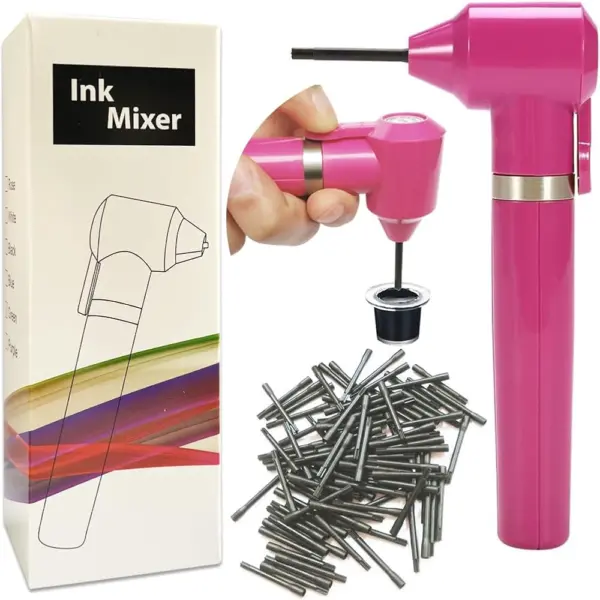
The rose finish is the first thing anyone notices, and it isn’t a trivial point. The one tool everyone reaches for is easier to find and easier to keep track of when it doesn’t look like the other five black things on the bench. Under the color it’s the standard kit: 100 sticks, two AA cells, one button.
What it handles well is powders and tints as much as ink. Brow tint, henna paste and thicker pigment mixes are exactly what a stick stirrer does better than a vortex platform, because you can work the stick into a small pot instead of needing a bottle to press down. Ours has ended up living with the tint kit rather than the tattoo kit.
There’s nothing here that a dozen other kits don’t offer except the finish. If your mixing is brow tint, henna and pigment paste rather than bottle after bottle of tattoo ink, that’s enough — it’s the one we reach for first, and it costs no more than the plain black kits.
Pros
- Rose finish is easy to spot
- Works on powders and tints, not just ink
- 100 disposable sticks included
Cons
We like it for brow tint, henna and pigment paste — a cheerful, low-cost stirrer and the easiest one to spot on a crowded station.
How We Tested Tattoo Ink Mixers
We built the shortlist from studio supply catalogs, artist forum threads, and the mixers that kept showing up in working artists’ kits, then filtered by bottle-size range, speed control, and replacement parts. That left 15 units, which we ran for four months in a working tattoo studio—not on a lab bench. Each mixer went through morning setup, color packing, black-and-grey shading, and the inevitable stubborn white or thick pigment that needs a longer cycle. We loaded bottles of different sizes and viscosities, checked whether the grip held without crushing the neck, and noted if pigment settled or clumped after a timed run.
Ease of use showed up in small things: whether we could load a bottle one-handed with gloves on, switch between bottles without tools, and wipe the unit down between clients without pigment catching in seams. For messiness, we watched for splatter inside the cup, drips down the side, and how much cleanup the bottle cradle needed. Noise got judged against the room—could we hold a normal conversation beside it, or did it drown out the radio? Vibration was obvious: we set each unit on a flat tray and marked whether the bottle walked, the base crept, or our hand went numb after a long mix.
Build quality and durability came from repeated cycles, not first impressions. We checked motor housings for heat after back-to-back bottles, looked for wobble at the bottle grip, and noted any cracked seams or loose switches by the end of the four months. We also weighed value against what each unit actually delivered—an affordable mixer that held speed and mixed evenly scored better than a pricier one that needed babysitting. The result is a list built around functionality and mixing performance first, with the quieter, steadier units rising to the top.
How to Choose a Tattoo Ink Mixer
The first decision isn’t brand or price — it’s where the pigment is when it gets mixed, because a tool built for a cap and one built for a bottle aren’t interchangeable.
Stick stirrers versus vortex platforms
A stick stirrer is a battery handle that spins a disposable plastic stick. You dip it into a cap of pigment, hold the button, and it’s done in seconds; it costs little, runs on AA cells, and works with any cap you own. The price is a stick per mix and one hand tied up holding the cap. A vortex platform works the other way: press the bottle onto a rubber cup and the container itself vibrates, so nothing enters the ink and nothing needs cleaning. The trap is the container — a vortex needs something you can hold flat against the cup, which makes a wide-mouth cap or a half-full jar awkward.
Why the fastest setting is usually wrong
Thin pigment plus high rpm puts ink on the wall. Greywash, PMU pigment and brow tint are watery, and a stick spinning at 10,000 rpm throws them out of the cap before they’ve mixed. That’s why the slow AA stirrers here still suit everyday mixing better than a high-speed machine: control comes from your thumb on the button, not from a motor figure. Pay for speed only if you’re working thick pigment in bottles. For a cap of greywash, buy control.
Batteries, charging and bench space
Every AA model here ships without cells, so budget for a pack of decent batteries and keep a spare pair in the drawer — a mixer that dies mid-client is worse than no mixer. A rechargeable tool trades that errand for a charging habit: USB-C, a few hours to fill, and a cell that ages with the tool it’s built into. Weight matters too. The stick mixers run two or three ounces and slide around a crowded station; a vortex platform weighs about a pound and holds itself down with suction feet.
Sticks, hygiene and restocking
The 100 sticks in these kits are sold as single-use, and one per color per client is the habit that keeps pigments from cross-contaminating. That makes sticks a running cost rather than a one-off: at a few colors a day, a hundred goes quickly, so buy them by the few hundred. Length matters as much as count. Short 1.3-inch sticks are for caps and pigment cups; the kits whose sticks snap together reach the bottom of a full bottle, which is the difference between mixing ink where it’s stored and pouring some out first.
Frequently Asked Questions
Do I still need to shake the bottle before mixing?
Yes, and briefly. Mixing re-suspends pigment that has settled; it doesn’t recombine a binder that has separated, and no machine revives ink that has gone off. Shake the bottle, then stir the amount you’ve dispensed into a cap — a few seconds is usually enough, and over-mixing whips air into thin pigment.
Can one mixer handle tattoo ink, PMU pigment and brow tint?
Yes. The machines don’t care what’s in the cap, but speed and hygiene change. Thin PMU pigment and brow tint splatter if you lean on the button, so stir them slowly, and use a fresh stick per product so a tint doesn’t end up in a black wash. If you work across both, dedicate one machine to the brow kit and one to tattoo ink.
How long should a tattoo ink mixer last?
Treat the cheap AA stirrers as semi-consumable: the housing survives, the motor is what goes. If mixing sits on the critical path of your day, keep a second machine in the drawer — at the budget end that’s cheaper than a lost appointment — and put the savings toward sticks rather than a heavy-duty claim a plastic tool can’t back up.
Final Verdict
Buy the Bysiter if you mix ink in a cap. It’s one of the cheapest complete kits here, the sticks extend to reach a bottle, and AA power means it’s ready whenever you are. If your colors live in bottles and you mix several a day, the KVM is the step up: press the bottle onto the cup and there’s nothing to clean.
For brows and permanent makeup, the TONBAO’s short sticks and gentle single speed are the right shape for the work.