This post contains affiliate links. We may earn a small commission when you buy through our links — at no extra cost to you.
A tattoo foot pedal does one job: it closes the circuit between your power supply and your machine so your hands stay free to stretch skin and hold the needle at the right angle. But you never look at it — you feel it. A mushy spring or a switch that fires half a second late shows up in your linework long before you’re willing to admit the pedal is failing, and mid-session is a lousy time to find out.
I’ve burned through my share of pedals that clicked, wobbled, or quit after a month of steady work, so over the past eight months my team and I put a dozen of them through real shop sessions — lining, shading, packing color on four-hour sits — to see which ones hold. What separates them isn’t flashy specs; it’s the housing material, the switch inside, and how the cord is anchored. The ones below earned a permanent spot on the floor.
Our Top Picks
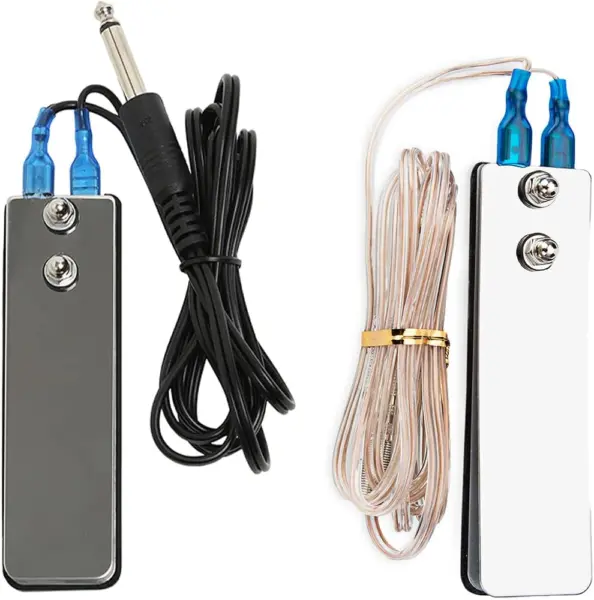
The Best Tattoo Foot Pedals, Reviewed
New Star 360 GEM Pedal – Best Overall
Key Features
- Included: Pedal and clip cord
- Connection: 1/4 in. phono plug
- Cord length: 5 ft
- Switch style: 360-degree round
- Price: Midrange
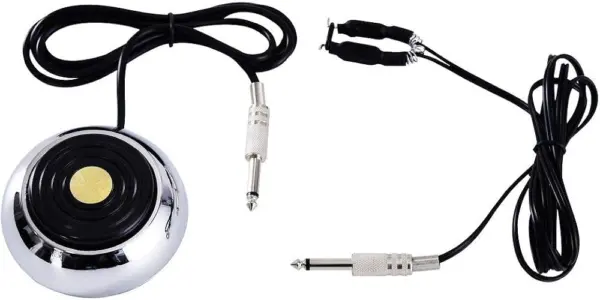
The New Star kit starts with a useful extra: a matching clip cord. It arrives with a 360-degree stainless pedal and a soft clip cord, both using the standard 1/4-inch phono plug, so there is no second order or adapter to sort out. That complete connection is why it earns our recommendation.
The round top is the part that matters during work. Because the switch wraps through 360 degrees, it does not demand a precise stomp; toe, ball or the side of your foot can trigger it. The stainless body and rubber base give it a planted feel on a hard studio floor, and the five-foot cord reaches a power supply without stretching across the room. We also appreciate that the pedal sits low enough to keep the ankle relaxed during a long session.
Compared with the bare pedals in this group, the bundled clip cord is the practical advantage. It turns a replacement part into a complete spare, and the standard plug means you can move it between supplies without an adapter. For a working station, that is the kind of detail that keeps a session moving when a cable or switch gives trouble. The clip cord is the difference between a bare switch and a kit you can drop into a case.
Pros
- Complete kit includes a clip cord
- 360-degree contact works from any angle
- Standard 1/4-inch phono plug
- Rubber base adds grip
Cons
- Switch can cut out after initial use
For a full studio station, we reach for the New Star 360 GEM: a stable 360-degree stainless pedal that arrives with a matching clip cord and a standard plug.
Dragonhawk F1 Pedal – Best for Travel
Key Features
- Weight: 2.9 oz
- Connection: Standard plug
- Dimensions: 2.75 x 1.1 x 1.1 in.
- Protection: IP65
- Price: Midrange
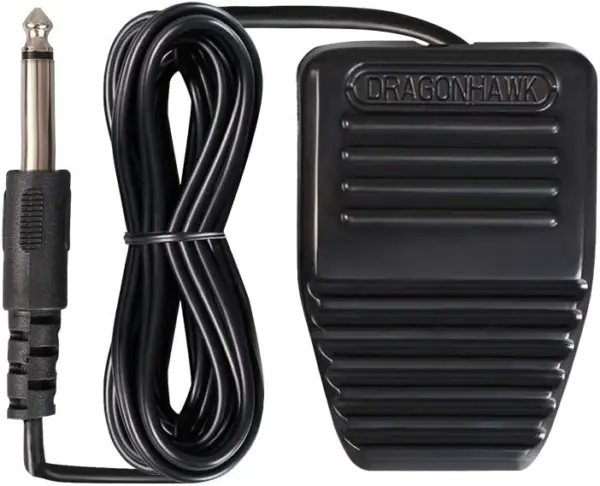
The F1’s first trick is disappearing. At 2.75 inches long and 2.9 ounces, it takes up less space than a roll of grip tape in a travel case, and the standard plug means it can live with a spare power supply. On a bench, it looks almost too small for the job.
On a crowded station, that small footprint is the reason to pick it: the F1 sits where you put it instead of crowding the base of the stand. The anti-slip pad underneath and the IP65-rated housing make it a practical traveller, not just a novelty. Plug it in, put a foot on it, and work; there is nothing to adjust.
It is the pedal we leave in the case for mobile days and the one we move to a small station when a full-size round pedal takes up too much floor. That is a narrow job, and it does that job cleanly. It also makes a good second pedal for a fixed station: when the main pedal feels too wide under a rolling stool, the F1 can tuck beside it.
Pros
- Ultra-compact 2.75-inch footprint
- Light 2.9-ounce body
- IP65-rated housing
- Standard plug for tattoo supplies
Cons
- Tiny plate is less forgiving underfoot
Traveling artists should start here: the F1 is a 2.9-ounce pedal that disappears into a kit bag, though its tiny plate asks for a deliberate stomp.
Combofix Foot Pedal – Best Budget
Key Features
- Included: Pedal and clip cord
- Material: ABS
- Connection: 1/4 in. phono plug
- Cord length: 5 ft
- Price: Budget
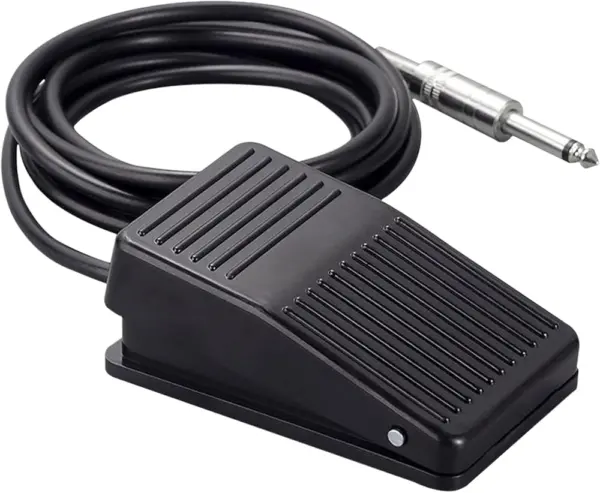
The Combofix makes its case with simplicity rather than heft. The ABS housing keeps the pedal light, and the grooved top gives your foot a broad, non-slip place to land. A five-foot clip cord and standard 1/4-inch plug are included, so it connects to a typical supply without a trip to the parts drawer.
What we appreciate most is the low drama of the design: no extra dials, no unusual connector, nothing to configure. The touch switch is sensitive enough for quick pulses, and the grooved top gives your foot a consistent landing spot. It is the sort of pedal we keep as a second unit for a new artist’s station, where simple and replaceable matters more than a mirror finish.
For a budget setup, that is a sensible trade. The Combofix does not pretend to be a heavy stainless studio pedal, and it costs less because of it. What you get is a clean, functional switch with the cable and plug already sorted. That makes it easy to recommend as a first pedal or a spare.
Pros
- Includes five-foot clip cord
- Standard 1/4-inch plug
- Grooved non-slip top
- Simple ABS build is light
Cons
- ABS body lacks stainless heft
When the budget decides, this is the pedal we point to: simple ABS construction, a five-foot clip cord and a standard plug for a typical supply.
DOWEI Mini Flat Pedal – Best Low-Profile
Key Features
- Weight: 2.65 oz
- Connection: 1/4 in. phono plug
- Cord length: 6.5 ft
- Switch style: Mini flat
- Price: Budget
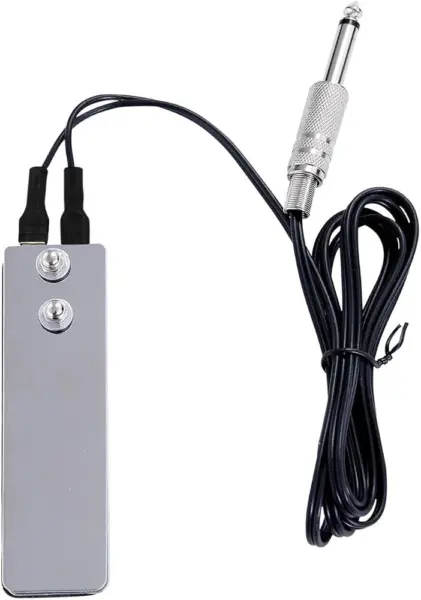
A flat pedal changes the geometry of the job. Instead of rolling your ankle over a round gem, the DOWEI gives you a thin stainless plate to rest a heel or toe on, which suits artists who like to keep a foot planted and tap with the ball. The low height is the appeal here, not a compromise.
The 6.5-foot cord is one of the longest in this group, and at 2.65 ounces the pedal is light enough to move from station to travel case without thought. The non-slip base is there to keep it from skating, and the standard 1/4-inch plug keeps the connection ordinary. The stainless top wipes clean easily, which matters in a working studio.
Where it earns our recommendation is the combination of that long reach and low profile: it fits under a stand without crowding the foot space, and the light weight makes it easy to reposition. It is the flat pedal we reach for when the station is tight and the power supply sits just out of easy reach. The flat shape also leaves the top of the foot clear, which some artists prefer when they work seated.
Pros
- Long 6.5-foot cord
- Light 2.65-ounce body
- Low-profile flat plate
- Standard 1/4-inch plug
Cons
- Small plate takes deliberate foot placement
A low, flat pedal suits a planted foot, and the DOWEI is the one we choose for a compact station with a six-and-a-half-foot cord.
TorSor 2-Pack Pedal – Best Backup Pair
Key Features
- Pack: 2 pedals
- Connection: 6.3 mm plug
- Cord length: 1.5 m
- Switch style: Flat plate
- Price: Budget
The TorSor pack answers a question most single pedals ignore: what happens when the one under your foot stops working? You get two flat-plate pedals, each with a 1.5-meter cable and a 6.3 mm plug, so one can live in the case while the other stays on the floor. That is not a glamorous feature, but it is the one that keeps a session alive.
We treat this as a backup-first purchase, not a fancy primary. The flat plate is simple, the cable length is about average for the group, and the matching plugs mean either pedal can replace the other without rewiring. For a solo artist, that redundancy is worth more than a nicer finish. The pair also makes sense for a shared shop where pedals get moved between stations.
There is not much to learn here: plug one in, keep the other close, and check both before a busy day. The flat plate is easy to wipe and the simple housing has no extra controls to clean around. It is a basic kit, and the second pedal is the whole point.
Pros
- Two pedals for redundancy
- 1.5-meter cable on each
- 6.3 mm plug
- Simple flat-plate design
Cons
- Flat plate gives less angle flexibility
Buy two pedals once and keep one in the case: the TorSor pair is the practical insurance policy for a working station.
Anghie Stainless Pedal – Best for Fixed Heavy Stations
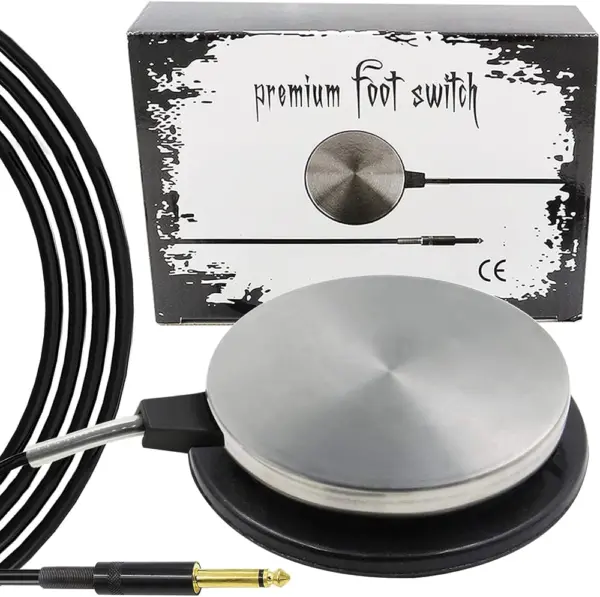
Key Features
- Body: Stainless steel
- Connection: 1/4 in. phono plug
- Cord length: 6.5 ft silicone
- Switch style: 360-degree round
- Price: Premium
The Anghie feels like the most substantial pedal in this group. Its stainless body and round 360-degree top give it the heft of a fixed-station tool, and the rubber base is there to keep that mass from sliding. This is not a pedal you tuck into a pocket; it is one you set up and leave.
The 360-degree contact is the reason to choose a round pedal in the first place. You can tap it from the toe, the ball or the side of the foot without lining up a flat plate. The low height is meant to keep the ankle from cocking upward during long sessions, and the smooth stainless top wipes down easily.
The 6.5-foot silicone cord is the practical part we appreciate most. It gives you room to route the cable away from your chair, and silicone stays more flexible than a stiff vinyl cord when the station is cold. That extra reach matters if your power supply lives on a shelf rather than at the base of the stand.
It is a fixed-station pedal more than a travel one. The stainless body and long cord suit a permanent setup where the supply sits away from the chair, and the round top rewards a foot that moves around. That is the job it does well.
Pros
- 360-degree stainless top
- 6.5-foot silicone cord
- Rubber anti-slip base
- Low-profile ankle position
Cons
- Long-term reliability is the weak point
The premium stainless choice here is the Anghie, with a 6.5-foot silicone cord and a 360-degree top for a fixed station.
New Star Mini Flat Pedal – Best for Second Stations
Key Features
- Material: Stainless steel
- Connection: 1/4 in. phono plug
- Cord length: 6.5 ft
- Switch style: Mini flat
- Price: Budget
The Mini Flat is the least dramatic pedal here: a thin stainless plate, a 6.5-foot cord, and a standard 1/4-inch plug. That is not a criticism. If you already know you like a flat pedal, the simplicity is the point. There is no extra housing, no bulky base, and nothing to adjust.
The long cord is the useful surprise. It gives this small pedal the same reach as the DOWEI, so it can sit under a stand while the supply stays on a shelf. The stainless plate is easy to wipe down, and the low height keeps your ankle closer to the floor. For a compact station, those are the details that matter more than a decorative finish.
Where it earns a place is as a second pedal or a low-cost primary for a simple station. It is the one we leave under a compact stand when we want a flat, wipeable surface and a long cord without adding clutter. There is no extra housing or control to clean around, which keeps a shared station simple.
Pros
- Long 6.5-foot cord
- Slim stainless plate
- Low-profile flat design
- Standard 1/4-inch plug
Cons
- Small plate takes deliberate placement
For a simple second station, the New Star Mini Flat pairs a slim stainless plate with a 6.5-foot cord and a standard plug.
How We Tested the Best Tattoo Foot Pedals
We started by reading through shop forums and supplier catalogs and asking working artists which pedals they reorder, then narrowed the list by housing material, switch type, cord length, and connector compatibility with the power supplies most machines run on. A dozen made the cut. Each one was mounted at a real workstation and used during actual appointments across eight months — lining, shading, and long color-packing sessions on clients who booked four-hour sits.
Most of what matters shows up in the first hour. We noted how hard you have to press before the machine fires, how far the pedal travels before the click, and whether it responded at the lightest touch or demanded a deliberate stomp. Some sessions we worked barefoot and some in sneakers, since that’s how a shop actually runs, and we watched whether the housing crept across the floor or stayed put. Every week we checked the cord where it enters the housing for strain, wiped each pedal down the way it gets wiped between clients, and pressed hard on the corners to see if the plastic gave.
Reliability got the longest look. Each pedal stayed on the bench for weeks of continuous use, and we logged any that developed dead spots, double-fired, or went quiet mid-session — the failures that cost you a line, not just a replacement. Because material is where cheap pedals hide their shortcuts, we also opened the housings to see how the switch was mounted and whether the internals justified the price. More than once, a sealed, solidly built pedal beat out a costlier one whose shell flexed under a heel.
How to Choose a Tattoo Foot Pedal
The right pedal is the one your power supply accepts without an adapter and your foot finds without looking; everything else is secondary.
Check the plug and cable run first
Most tattoo power supplies use a 1/4-inch phono jack for the pedal, and the models here follow that standard. Check the jack on your own supply before ordering, especially if it uses a proprietary connector or a clip-cord-only output. Then look at reach: a five-foot cord covers a typical stand, while the 6.5-foot models here give more room to route the cable away from a rolling chair. Measure the path from the supply to your foot, not just the straight-line distance.
Round or flat is a foot-comfort decision
Round 360-degree pedals accept a tap from almost any angle; flat pedals keep the ankle lower and suit a planted heel. If you shift your foot while working, round is easier. If you press straight down and want the pedal to disappear under your stand, flat makes sense. The New Star and Anghie show the round approach; the DOWEI and New Star Mini Flat show the flat one.
Stability comes from weight, grip and cable routing
A heavy stainless pedal is less likely to skate than a light ABS one, but a non-slip base and sensible cable routing matter just as much. On a smooth floor, keep the cord from pulling across your foot and check that the pad underneath is actually contacting the floor. Traveling artists can accept a lighter body because it packs smaller; a fixed station can use the mass.
Treat the switch as a wear item
Even a good pedal is a single point of failure. Test a new one through a full session before a client sits down, keep the cable strain-free, and have a spare if your income depends on the station. A two-pack like the TorSor is one way to do that; a second full pedal is another. The point is not to wait for a failure in the middle of a tattoo.
Frequently Asked Questions
Why use a tattoo foot pedal instead of the switch on the power supply?
A pedal frees both hands and keeps your rhythm. The machine starts and stops under your foot while you stay focused on the needle, which matters most during lining, shading and color packing. It is not mandatory, but it changes the rhythm of a session by removing a reach to the bench from every pause.
Can I use a keyboard sustain pedal with a tattoo power supply?
Only if it is a momentary, normally open switch with the same 1/4-inch plug. A latching sustain pedal stays on after you lift, which is wrong for tattoo power. Check the action before plugging it in: if the pedal clicks once and stays down, do not use it for a machine.
How should I clean a tattoo foot pedal?
Unplug the power supply first, wipe the housing with a disinfectant compatible with its material, and keep liquid out of the switch and plug. A smooth stainless top is easier to wipe than a grooved plastic one, but no pedal should be soaked. Dry it fully before reconnecting, and replace a frayed cord rather than taping it.
What should I do if the pedal stays on after I lift my foot?
Stop using it immediately. A pedal that sticks can keep the machine running when you expect it to be off, so unplug the supply, check for debris or a jammed plate, and replace the pedal if it does not return freely. Keeping a spare pedal is the practical fix.
Final Verdict
For most artists, we recommend the New Star 360 GEM Pedal. The 360-degree stainless top, five-foot cord, and included clip cord make it a complete, stable replacement, and it offers the best balance of build and value in this group. If you work on the move, the Dragonhawk F1 is the compact alternative; if you want the simplest low-cost setup, the Combofix is the one to start with.