This post contains affiliate links. We may earn a small commission when you buy through our links — at no extra cost to you.
A tattoo numbing cream is supposed to make the needle bearable, but most people I know have a story about one that didn’t—or one that wore off when the shading started. I’ve sat through enough sessions to know that a good one is the difference between white-knuckling the armrest and actually relaxing into the chair. Over the past eight months, our team has tested 14 numbing creams on real tattoos—small linework, large color pieces, and touch-ups on arms, ribs, and ankles.
A good numbing cream should feel like a light lotion going on, not a stinging gel, and it should absorb without leaving a greasy film that smears the stencil or makes the artist’s job harder. We paid attention to how quickly each one kicked in, how long the numbness lasted (some faded before the outline was done), and whether it caused any redness or irritation. We also noted which ones were worth the money per session and which ones our testers would recommend. The ones that made the cut are below.


Best for Overall Tattoo Numbing
Ebanel 5% Lidocaine Numbing Cream
Key Features
- Size: 1.34 oz
- Onset: 3–5 minutes
- Wear time: 1–2 hours
- Active ingredient: 5% lidocaine
- Price: Midrange
Tattoo sessions are where Ebanel earns its place: this is the cream with the deepest tattoo-specific track record in the group, and it is the one we recommend first for a standard appointment. The formula is 5% lidocaine, the highest concentration you can get over the counter, and the label lists a 3–5 minute start, a 20–25 minute peak, and a 1–2 hour wear window. Those numbers matter because they set the rhythm of the session: give it the full 20–25 minutes before the needle starts, and you are using it at its strongest rather than hoping it catches up mid-line.
The 1.34-ounce tube is a sensible size for an arm, a calf, or a short sitting, and the oil-free, fragrance-free, non-greasy formula is easy to work into skin without leaving a slippery film. We like the allantoin, vitamin E, and aloe in the ingredient list for comfort, but the main event is the lidocaine. If your skin is sensitive, patch-test first; the formula is designed to be gentle, not magically reaction-free.
The limitation is time. A 1–2 hour window is fine for a lot of appointments, but it is not a full-day pass for a large piece, and some people simply do not get the same level of numbness. For a longer session, plan a break or a reapplication that fits the label and your artist’s process. The tube is small enough to bring a second one if you are covering more than one area.
Pros
- 5% lidocaine with a 3–5 minute start
- Deepest tattoo-specific track record here
- Oil-free, fragrance-free, non-greasy
- 20–25 minute peak timing
Cons
- Wear window is only 1–2 hours
- Numbing is not universal
For most tattoo sessions, Ebanel is the one we recommend: fast 5% lidocaine, the strongest tattoo-specific track record here, and a plan-friendly tube size.
Best for Sensitive Skin
Zensa Numbing Cream 5% Lidocaine
Key Features
- Size: 1.06 oz
- Onset: 20 minutes
- Wear time: Up to 3 hours
- Active ingredient: 5% lidocaine
- Price: Premium
The first thing we notice about Zensa is how little is in it: seven ingredients, no steroid, and a water-based formula built around 5% lidocaine. It lists a 20-minute onset and up to 3 hours of wear, and the 30-gram tube is aimed at sensitive skin, with vitamin E and a physiologic pH. That is a different pitch from the bulk lidocaine tubes: less maximize the dose and more keep the formula clean.
We think that makes Zensa the pick for a sensitive spot or a permanent-makeup appointment, where a smaller area and a shorter ingredient list are worth paying for. The 20-minute wait is not the fastest here, but it is easy to plan around, and the water-based texture absorbs without the heaviness of an oil-based cream. The price is the part we mind: you are paying a premium for 30 grams, and the tube will not cover a large back piece. Wear time is also less settled than the label suggests; up to 3 hours is the claim, but some sessions get closer to 2 before the edge comes back. If your artist is working on brows, lips, or a small sensitive area, the trade-off makes more sense than it does on a full sleeve.
Pros
- Minimal seven-ingredient water-based formula
- 20-minute onset, up to 3 hours listed
- Physiologic pH for sensitive skin
Cons
- Premium price for a 30 g tube
- Wear-off can arrive around 2 hours
Choose Zensa when your skin is reactive or you’re booking permanent makeup; the clean water-based formula is worth the premium if the area is small.
Best for Long Sessions
Dr. Numb 5% Lidocaine Numbing Cream
Key Features
- Size: 1.06 oz
- Onset: 15 minutes
- Wear time: 2–4 hours
- Active ingredient: 5% lidocaine
- Price: Premium
Dr. Numb is the one that puts the longest wear window on the label: 2–4 hours, with a 15-minute onset. That is the number that makes it interesting for a long appointment. The cream is 5% lidocaine, oil-free and water-based, and the 30-gram tube is aimed at people who want a professional-style numbing cream rather than a bulk body tube. The label also says it is hypoallergenic and suitable for all skin types, though no topical anesthetic is truly reaction-proof.
We appreciate the longer claimed window because it gives you a buffer on a four-hour session, and the 15-minute onset is quicker than Zensa’s 20-minute wait, though Ebanel still starts faster at 3–5 minutes. But the premium price is hard to ignore for 30 grams, and the wear time does not land the same way for everyone; some sessions get about 2 hours before the numbing fades. If you are booking a long piece, bring a second tube or plan a break rather than assuming the label’s upper end is yours.
The tattoo-specific use is strong enough that we keep it in the long-session slot, and the water-based texture is easy to spread without a greasy residue. The catch is skin tolerance: if you have reacted to lidocaine or adhesives before, patch-test this one well before the appointment. It is a good tool for the right session, not a universal upgrade over the cheaper picks.
Pros
- 15-minute onset for faster starts
- 2–4 hour listed wear window
- Oil-free, water-based, non-greasy
- Strong tattoo-session use behind it
Cons
- Premium price for a 30 g tube
- Wear time falls short for some
Dr. Numb earns the long-session slot with the longest listed wear window and a 15-minute onset, though the premium price and uneven wear keep it specialized.
Best for Large Tattoo Areas
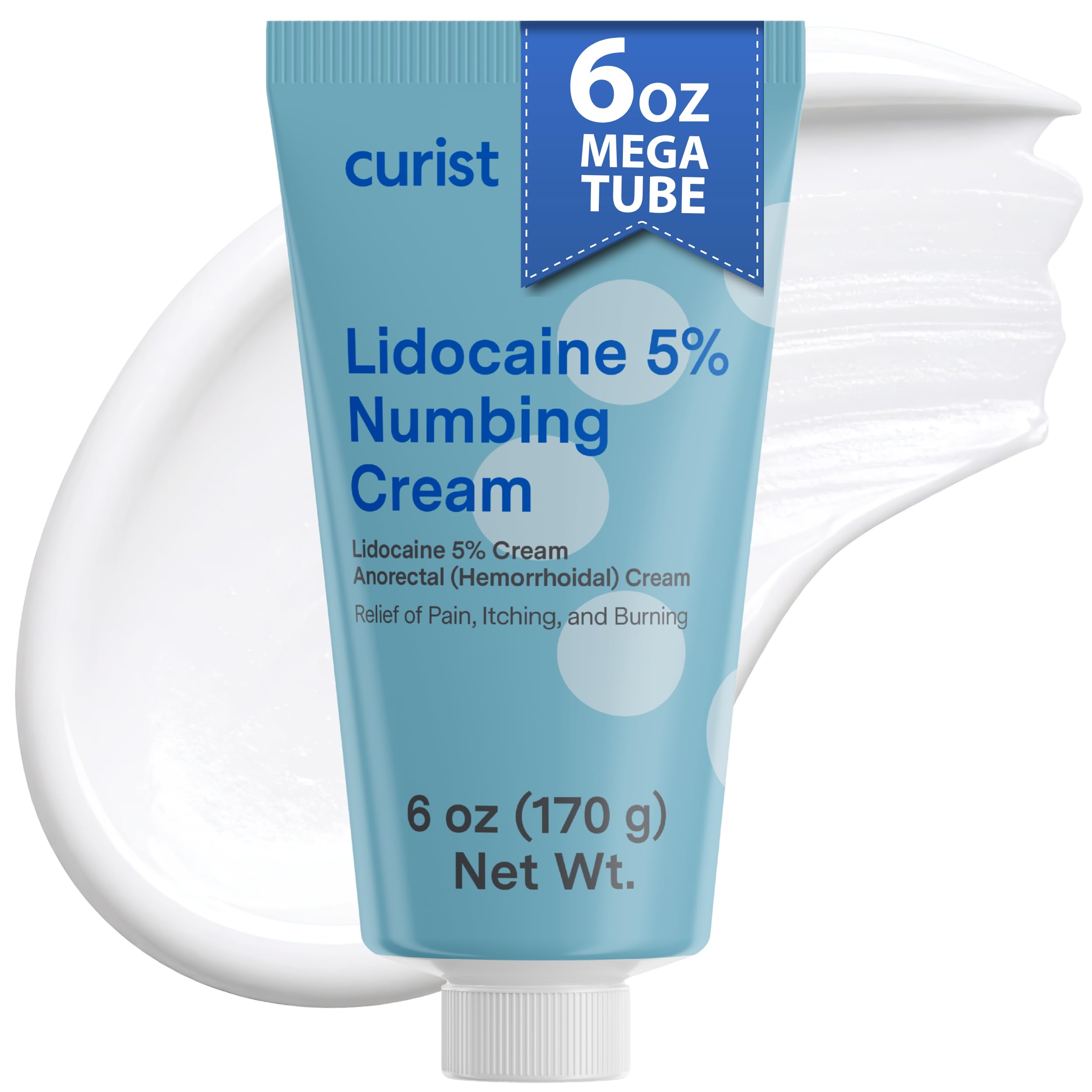
Curist 5% Lidocaine Numbing Cream
Key Features
- Size: 6 oz (170 g)
- Labeled use: Anorectal relief
- Active ingredient: 5% lidocaine
- Price: Budget
A six-ounce tube is the reason Curist stands out: it is the bulk buy of the group, and it is the one that makes sense when the tattoo is larger than a palm. The formula is 5% lidocaine, the same maximum OTC strength as the small tattoo tubes, but you get 170 grams of cream for a budget price.
That changes the math for a back piece, a chest piece, or a multi-session project where you need enough product to cover a wide area without rationing. It is not labeled for tattoos; the tube is sold for anorectal relief, so tattoo use is a practical off-label choice rather than the manufacturer’s stated purpose.
The numbing effect is strong for general pain and effectiveness, with a smaller but positive tattoo-specific pocket, and the large tube is genuinely useful when you are covering a lot of skin. The trade-off is that Curist does not list an onset or a wear time, so you have less to plan around than you do with Ebanel or Zensa. Some people also get less numbness than they expect, which is true of every lidocaine cream but matters more when you are buying in bulk.
We do not start here for a small wrist tattoo; the tube is overkill, and the lack of tattoo labeling may give an artist pause. For a large piece where coverage and cost per session matter more than a precise wear window, it is the practical pick. Ask your artist before using it, and follow the label’s external-use limits.
Pros
- Six-ounce tube, largest here
- 5% lidocaine at a budget price
- Strong general numbing and pain-relief use
Cons
- Labeled for hemorrhoid relief, not tattoos
- No onset or wear time listed
- Numbing varies by user
Buy Curist for large pieces: the six-ounce 5% lidocaine tube is the bulk-value play, as long as you clear the off-label tattoo use with your artist.
Best for Small Tattoos
WELMATE 5% Lidocaine Numbing Cream

Key Features
- Size: 1 oz
- Packaging: Child-resistant
- Labeled use: External hemorrhoid relief
- Active ingredient: 5% lidocaine
- Price: Budget
The child-resistant lid is the first thing you meet on WELMATE, and it is not a small annoyance: it takes real hand strength to get off. Under the lid is a 1-ounce tube of 5% lidocaine cream, the maximum OTC strength, with a simple external-use formula that can be applied up to six times a day. The small size is the appeal for a wrist, ankle, or short sitting; it slips into a bag and does not commit you to a giant tube. The lid is the catch, and for anyone with arthritis or weak grip it can be a dealbreaker.
We like the compact format and the strong general numbing use behind it, but WELMATE is not positioned as a tattoo cream and does not have the tattoo-specific track record of Ebanel, Zensa, or Dr. Numb. That does not make it useless; lidocaine is lidocaine, and a 5% cream can still take the edge off if it suits your skin. It just means you are choosing it on strength and size, not on a history of tattoo sessions. For a small piece, the tube is a sensible backup or travel option, and the low shelf price makes it easy to test. For a long session or a large area, the 1-ounce size and the lid make it a fussier choice than the picks above. If your hands are strong and your tattoo is small, it earns a place in the bag.
Pros
- 5% lidocaine in a 1 oz tube
- Strong general numbing use
- External use up to six times daily
Cons
- Child-resistant lid is hard to open
- Not positioned for tattoo use
WELMATE is a small-tattoo backup with maximum-strength lidocaine, but the stubborn lid and thin tattoo-specific use hold it back.
Best for Texture-First Use
tuiwaro Numbing Cream

Key Features
- Size: 50 mL (1.7 fl oz)
- Scent: Fragrance-free
- Texture: Light cream-gel
- Key ingredients: Emu oil and arnica
- Price: Midrange
Tuiwaro takes a different route: emu oil, arnica, and a light cream-gel texture, with no lidocaine percentage stated. That makes it the texture-first option in this group. The 50 mL tube has a narrow tip for precise application, and the formula is fragrance-free, alcohol-free, and dye-free, so it is aimed at people who want a cream that feels like skincare rather than a pharmacy anesthetic. The cream-gel consistency is light and non-greasy, which is pleasant on a small area.
We were interested in the tattoo-session use because it is there despite the missing strength number, and the narrow tip is genuinely handy for a small piece. But without a stated active percentage, you cannot compare it on numbness the way you can with the 5% lidocaine picks. The wear time and scent also split people: some get hours of comfort, others find it fades fast or smells stronger than expected. Treat it as a soothing cream that may help, not a guaranteed numbing layer.
If you already know lidocaine works for you and you want a lighter-feeling product for a short session, it is worth a patch test. If you are booking a long or painful piece and want the most predictable numbness, the disclosed 5% creams are the safer bet. The 50 mL tube is small enough to carry but not generous enough for a back piece.
Pros
- Emu oil and arnica in a light cream-gel
- Narrow tip for precise application
- Fragrance-free, alcohol-free, dye-free formula
Cons
- No lidocaine percentage stated
- Wear time and scent are inconsistent
- 50 mL may run short on large areas
If you want a lighter, botanical-feeling cream, tuiwaro is worth a patch test; without a stated lidocaine percentage, it is not the predictable-numbness pick.
Best for Moisturizer-Like Feel
Adellina Numbing Cream

Key Features
- Size: 1.7 oz
- Scent: Odor-free
- Texture: Lightweight, non-greasy
- Key ingredients: Arnica and emu oil
- Price: Midrange
Adellina feels more like a body cream than a numbing tube: smooth, lightweight, and built around arnica and emu oil rather than a disclosed lidocaine number. The 1.7-ounce tube is easy to carry, and the formula is odor-free and non-greasy on paper, with a cooling sensation on contact. That makes it appealing for a small piece or for someone who dislikes the feel of a heavy anesthetic cream. The missing piece is the active percentage; the label says maximum strength but does not give you a lidocaine number to compare.
The tattoo-session use is stronger than the ingredient list alone would suggest, including long sittings where the area stayed comfortable, and the moisturizer-like texture is the reason we kept it as a texture-first alternative. But without a disclosed active, you are trusting the formula and your own patch test more than a strength rating. The scent is polarizing and the wear time is not consistent; some sessions get a couple of hours, others longer. For a small, sensitive spot or a shorter appointment where you want a cream that feels like skincare, it is a reasonable experiment. For a long, heavy piece, the 5% lidocaine picks give you more to plan around. Buy it for the texture and the botanical list, not for a guaranteed numbness number.
Pros
- Moisturizer-like, non-greasy texture on skin
- Arnica and emu oil in a 1.7 oz tube
- Tattoo-session use includes long sittings
Cons
- No active numbing percentage disclosed
- Scent and wear time vary
- 1.7 oz tube may run short
Adellina suits small or sensitive spots where texture matters, but the missing active percentage keeps it behind the 5% lidocaine creams for long sessions.
How We Tested Tattoo Numbing Creams
We started by scanning customer reviews and tattoo forum threads for numbing creams that people actually repurchase, then filtered out anything with a long list of reported skin reactions or a consistency that sounded more like a salve than a cream. We also looked at price per ounce and how many sessions a tube would realistically cover. That left us with 14 tubes, which we sent home with staff and volunteers who had tattoo appointments already on the books.
Testing happened in real tattoo sessions over eight months, on areas ranging from forearms and calves to ribs and ankles. We asked testers to apply the cream exactly as directed, then noted how it felt going on (cooling, tingling, stinging), how long it took to fully numb the skin, and how long that numbness held once the needle started. We checked in during the session—did they need a second application? Did they feel sharp pain during linework or shading? Did the cream help them sit longer or more comfortably? Afterward, we looked at the skin for redness, bumps, or dryness, and asked the artist whether the cream left any residue that interfered with the stencil or ink.
We also weighed cost against how many sessions each tube delivered, and we kept track of which creams testers said they would buy again. A few stood out for going on like a light moisturizer and lasting through a three-hour session; others faded fast or left a tacky film that made the artist wipe the skin repeatedly. We noted every one of those small annoyances, because in a tattoo session, small annoyances add up. The picks below reflect the creams that performed consistently across different skin types, tattoo styles, and session lengths.
How to Choose a Tattoo Numbing Cream
The right tattoo numbing cream is less about chasing the highest lidocaine number than about matching onset, wear time, and tube size to the session you’ve booked.
Start with the active ingredient, not the label noise
Every cream on this list that names a strength uses lidocaine, and 5% is the highest concentration you’ll find over the counter. That does not make every 5% cream identical: the vehicle, the amount you apply, and how long you leave it on all change what you feel. A cream that says maximum strength but never states an active percentage is asking you to pay for a guess; we prefer to see the number on the tube.
Adellina and tuiwaro lean on arnica and emu oil without disclosing a lidocaine percentage, so treat them as texture-first choices rather than strength-matched ones. If you know you want lidocaine, start with Ebanel, Zensa, Dr. Numb, Curist, or WELMATE.
Time the application to the appointment
Onset times in this group run from a few minutes to about twenty, and the peak is not the same as the total wear time. Ebanel lists a 3–5 minute start and a 20–25 minute peak; Zensa says 20 minutes; Dr. Numb says 15. If you apply in the parking lot and the artist starts immediately, you may miss the most numb part of the window. Read the label and give the cream the time it asks for.
The bigger trap is assuming the cream will last the whole session. Ebanel lists 1–2 hours of effect, Zensa up to 3, and Dr. Numb 2–4. For a long piece, plan a break or a reapplication that fits the label and your artist’s workflow. Numbing is a head start, not a guarantee through hour four.
Size the tube to the tattoo, not the shelf
A small wrist piece and a full back do not need the same tube. The 1-ounce range — WELMATE, Zensa, Dr. Numb — is easy to carry and enough for a compact area, but it can run short on a large piece. Curist’s 6-ounce tube is the bulk buy here, and it is the one we reach for when the tattoo is bigger than a palm. The trade-off is that a big tube can tempt you to overapply; use the label’s amount, not the tube’s capacity, as your guide.
Value is about coverage per session, not the lowest shelf price. A premium 30-gram tube that barely covers the area is not a bargain, and a large tube you use once is not either. Match the size to the piece and keep the leftover for the next session.
Check the vehicle for your skin
Water-based, oil-free formulas like Ebanel and Zensa are the easier default for tattoo work because they absorb without a heavy film. If your skin reacts to fragrances or long ingredient lists, Zensa’s seven-ingredient formula is the one we point to first. Emu oil and arnica products like Adellina and tuiwaro feel more like a body cream; that can be pleasant, but it also means the texture and scent may be more noticeable under a bandage or on a sensitive spot.
Patch-test anything new on a small area a day before your appointment, especially if you have sensitive skin or a history of lidocaine reactions. And tell your artist what you applied and when; they may have a preference about timing, wiping, or products on the area.
Frequently Asked Questions
Can I use tattoo numbing cream for tattoo removal or laser sessions?
Yes, the same topical numbing approach can be used on intact skin before a removal or laser appointment, but the clinic’s instructions come first because the device and aftercare differ from a tattoo needle. A 5% lidocaine cream such as Ebanel or Zensa is the usual starting point, and you should confirm timing with the practitioner. Do not apply it to skin that is already blistered, broken, or freshly treated.
Can I cover numbing cream with plastic wrap?
Only when the product label or your artist tells you to. Wrapping increases how much lidocaine reaches the skin, and more absorption is not automatically better; it can raise the chance of irritation or a systemic effect. If you want occlusion, ask your artist which method they are comfortable with, and never leave a wrap on longer than instructed.
Can I use numbing cream after my tattoo?
No. Numbing cream is for intact skin before or during the session, not a healing ointment for a fresh tattoo. Once the skin is open, use the aftercare your artist recommends; adding lidocaine to a raw tattoo can sting and is not what the product is labeled for. If the pain is unusual or you see a reaction, contact your artist or a clinician.
Why does the same cream work for one person and not another?
Skin thickness, placement, how early you apply, and how much you use all change the result; lidocaine also does not switch off pressure or vibration, only sharp pain for many people. That is why a cream with strong tattoo use can still disappoint on a rib piece. Patch-test, apply per the label, and do not keep layering beyond the stated limit if the first application does not take.
Final Verdict
For most tattoo sessions, Ebanel is the cream we recommend first. It has the deepest tattoo-specific track record here, a 5% lidocaine formula that starts quickly, and a tube size that covers a short session without turning into a lifetime supply. The catch is the 1–2 hour wear window, so a long appointment needs a plan.
If your skin is reactive or you’re having permanent makeup done, Zensa’s shorter ingredient list is the better fit. For a large back or chest piece, Curist’s six-ounce tube is the practical bulk buy. The right choice is the one that matches your session length and skin, not the one with the loudest label.